



When Cities Sink, So Do Civilizations. Urban collapse is not inevitable. But neither is urban renewal. It depends on us.
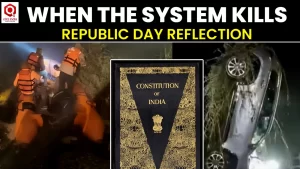
One rainy morning in Gurugram, a truck vanished into the earth.
A gaping crater—formed by nothing more than water and neglect—swallowed it whole. Not far away, in Madhya Pradesh, a newly built bridge curved into a surreal 90-degree turn, defying not just geometry, but logic, safety, and accountability.
These are not freak incidents. They are symptoms. Alarms. Red flags fluttering over the body of a nation that is urbanising without a soul, without a spine.
India’s cities—once imagined as engines of progress—are groaning under the weight of unplanned expansion, political neglect, and ecological ruin. From Delhi’s choked skies to Bengaluru’s drowned IT parks, the message is clear: we are not building cities; we are designing disasters.
The Governance Deficit: A Silent Killer
Every Indian megacity today suffers from a profound local governance deficit. While urban India houses nearly 500 million people, our cities remain governed by a framework that is structurally outdated and politically fragile.
Municipal bodies are weak. Mayors, where elected, are often powerless. Funds are delayed, diverted, or depleted. Accountability is elusive. The three-tier structure envisioned in the 74th Constitutional Amendment has failed to take root because states are unwilling to relinquish control over cities.
What we see instead is competitive blame games between municipal corporations, state governments, and central authorities. In this vacuum, unregulated construction, environmental violations, and poor infrastructure planning flourish.
Urban Politics: Myopic, Majoritarian, Market-Driven
Electoral politics, at both the municipal and state level, has turned cities into war zones of short-termism. Decisions are made to win votes, not to sustain lives.
Flyovers are prioritised over sewers. Slums are evicted to make way for elite housing projects, while the working poor are pushed further into invisibility. Infrastructure is measured not by resilience or equity, but by optics and Instagrammability.
Private developers often hold more power than public agencies. Zoning laws are bent, green belts are erased, and environmental impact assessments are manipulated. It is no surprise then that our cities flood when it rains and burn when it doesn’t.
Privatised Urbanism: Living in Bubbles, Dying in Silence
Perhaps the most tragic aspect of this crisis is the privatised life we now accept as normal. In cities like Gurugram, some of the wealthiest and most influential citizens reside behind high walls, guarded gates, and private power, water, and waste systems.
These urban elites live parallel lives—disconnected from the commons, the streets, and the failures of governance that affect the rest. There is no collective stake in the city’s welfare, only individual escape routes.
And yet, paradoxically, they hold the most potential to drive change. Their silence, therefore, is not just apathy—it is abdication.
The Global Contrast: Cities That Plan vs Cities That Panic
Around the world, cities like Copenhagen, Seoul, and Amsterdam are rethinking urbanism. They prioritise walkability, climate resilience, participatory budgeting, and decentralised governance.
In contrast, Indian cities are still obsessed with building highways through slums, chopping trees for metro lines, and outsourcing public functions to private contractors. We are planning for cars, not communities; for investors, not inhabitants.
India’s Fork in the Road: Reform or Ruin
India is still young. Half of our population is below 30. Urbanisation is not yet complete. This means we have a small but critical window to act.
We must:
Empower urban local bodies with funds, functionaries, and freedom.
Design cities for people, not just for profit or prestige.
Institutionalise participatory planning, where communities help shape their spaces.
Invest in climate-resilient infrastructure, not cosmetic projects.
Educate and involve the youth as city stewards, not just as renters or consumers.
Conclusion: From Collapse to Collective Action
One-off activism will not fix our cities. Nor will tweets, candle marches, or outrage after disasters.
What we need is political consensus—a war footing that rises above electoral greed. Because if we don’t act now, our cities will not just become unlivable; they will become engines of inequality, illness, and irreversible collapse.
Indian cities can still be reclaimed. But only if we stop living in bubbles. Only if we begin to care about what lies beyond our compound walls. Only if we realise that a city is not just where we live, but how we live together.
Urban collapse is not inevitable. But neither is urban renewal. It depends on us.



No comment yet, add your voice below!