

“Bade hokar kya banoge?” (What will you become when you grow up?) Almost every Indian child has been asked this question, framed as a single destination, a final answer, a finish line. I have never asked this to my kids. I ask “kya-kya banoge?” instead. What all. Not a single destination, but continuous, ongoing accumulation of capability.
Between 2021 and 2025, China’s higher education institutions revoked or suspended over 12,000 undergraduate degree programmes while introducing more than 10,200 new ones. China looked at its own degree factory and decided the factory itself needed rebuilding, not just its output.
Germany solved this decades before AI made it urgent. Germany’s dual system of vocational training consists of about 1.2 million apprentices and around 400,000 training companies. In 2021, about 74 percent of all apprentices received an employment contract after completing their training at the same company. A vocational certificate in Germany carries the same social dignity as a university degree. Nobody whispers about the apprentice the way too many Indian families still whisper about the child who chose a trade over a college seat.
India inherited something similar once. The shreni, our ancient guild system, fused craft, livelihood, ethics and community into a single transmission, master to apprentice, skill to character, simultaneously. We severed that thread when we imported a purely degree-based industrial model from elsewhere and forgot to ask whether it fit the soil it landed on.
The paradigm has shifted, and the world has already moved. hashtagEducation–hashtagSkilling–hashtagCertification. Not a single credential earned once at twenty-two, but a continuous, layered, lifelong practice of capability mapped against transferable skills, the kind of mapping exercise I have run personally while preparing executive skill-lever frameworks for institutional roles, translating decades of varied experience into language a hiring committee can actually use.
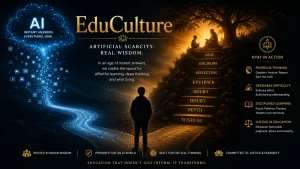
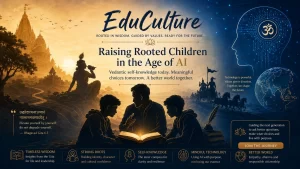
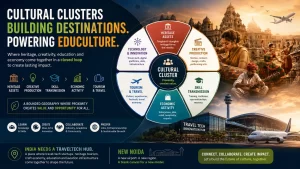
hashtagEduCulture‘s argument here is that the shreni model never separated skill from character, and Germany’s dual system never separated classroom from workplace. India’s emerging paradigm has to re-fuse both separations at once, treating continuous skilling as seriously as we once treated a single degree, and treating a craftsperson’s certification with the same dignity as a university gold medal.
Students, stop chasing the single answer to “what will you become.” Start building the portfolio of answers to “what all can you do.” Employers, the candidate who skills continuously will outperform the one who stopped learning the day they graduated. Policymakers, China has shown that the courage to dismantle an outdated credential system is now a competitive necessity, not an academic luxury.
The grammar of “kya-kya” instead of “kya” is small, but the shift in nation-building it points toward is immense.


No comment yet, add your voice below!